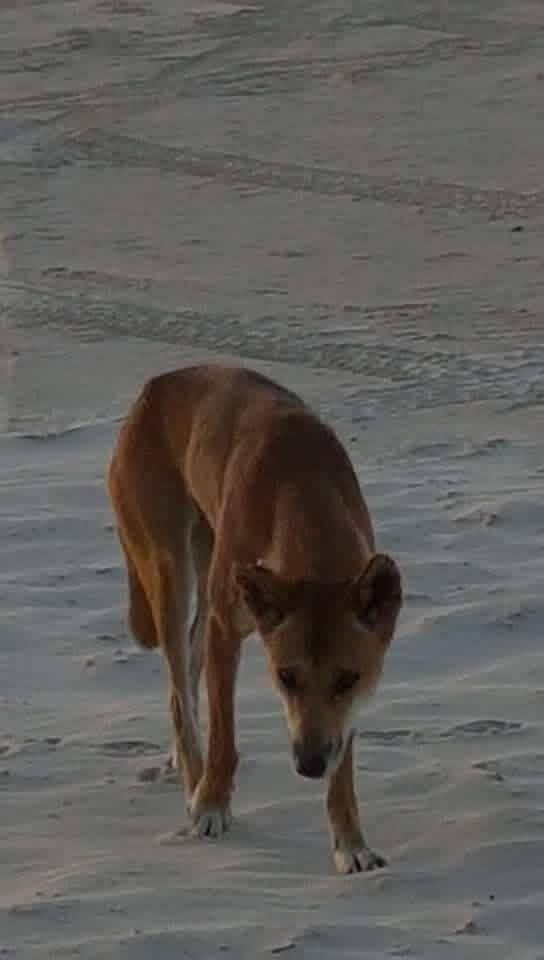
K'gari Dingoes
posted to Facebook by Jen Parker (Dingo conservationist and advocate)
Of course I advocate to restrict human access on K'gari....Time and time again people have demonstrated that they can't behave. 🙄
There is absolutely no excuse for poor and bad decisions on K'gari ❗️
The rangers on K'gari have reported a rise in Dingo aggression.
Dingoes have seasonal behaviour patterns.
It is a "perfect storm" right now because the high volume of summer tourists coincides with young Dingoes trying to establish themselves.
1. The current spike in activity (December to February) is known as Dispersal Season.
Dispersal Season (Now): This is when young Dingoes (sub-adults) are pushed out of their family groups to find their own territory. These "teenager" Dingoes are often inexperienced hunters, more unpredictable, and bolder in testing boundaries with humans to find easy food.
2. The Current "Heightened Activity" Alert
Rangers on K'gari issued a specific warning on December 12, 2025 (remaining in effect through January 2026) due to several behaviors that match what we're seeing:
Property Damage: Dingoes have been ripping into tents and stealing gear.
Habituation: Increased tourist activity over the summer holidays leads to Dingoes' losing their fear of people, especially if they associate humans with food.
Predatory Triggers: Unfortunately, activities like swimming or jogging (especially alone or at dawn/dusk) can trigger a Dingoes predatory instinct, which is a major concern in the Piper James case as she went for a 5:00 AM swim.
3: Mating Season (Upcoming): Then soon it will be mating season. On K'gari this typically occurs between March and May. During this time, aggression does spike again, but it’s usually driven by adult males fighting for dominance and protecting their territories.
The best thing to protect yourself is to be Dingo aware and available information is abundant.
Read 🔗 https://parks.qld.gov.au/parks/kgari-fraser/about/wongari-dingoes/dingo-management 🐾🐾👣
🚫 My post highlights a critical issue: the dangerous intersection of peak tourism and the natural "Dispersal Season" for Dingoes.
When young Dingoes—essentially "teenagers"—are trying to find their place in the world, they are naturally more prone to testing boundaries. Adding thousands of holiday-makers into that mix often leads to the habituation mentioned, where the animals lose their healthy fear of humans.
Respecting This Wilderness Matters greatly.
It isn't just about human safety; it's about the survival of the Dingoes. When humans behave poorly (leaving food out, trying to get close-up photos, or not securing campsites), it often results in:
Property Damage: Dingoes learning to rip through tents for food.
Behavioral Shifts: Wild animals becoming scavengers rather than hunters.
Negative Outcomes for Wildlife: Increased aggression often leads to rangers having to make the difficult decision to "manage" or cull the animals involved.
Key Takeaways from the Alert❗️
If you or anyone you know is heading there during this period (December – February), the rangers are emphasising:
Strict Food Security: Everything must be locked away; even the smell of a discarded wrapper can attract a sub-adult Dingo.
Distance is Safety: Treating them like wild predators, not "dogs," is the only way to keep them wild.
Supervision: Keeping children within arm's reach at all times. You shouldn't even take children.
It’s a tough balance between wanting people to experience the beauty of the island and needing to protect it from the impact of those very visitors.🐾🐾